

News Center


China on the right track to fulfill its modernization bids

Mar 30-2018   


BEIJING March 30th –China is capable to fulfill its modernization bids with efforts to implement reforms and opening up, according to dean of National School of Development of Peking University.


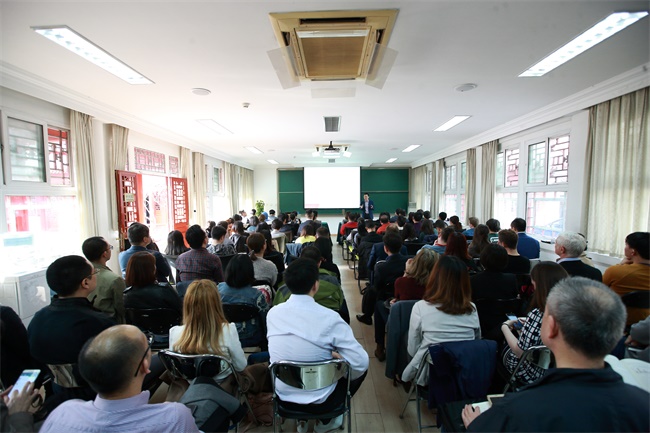
Speaking at a lecture held at National School of Development, Peking University on March 30th, Yao Yang, dean of National School of Development, Peking University explained where the world’s second largest economy is and where it is heading for.


Yao said with some foundation paved in the past several years, China is able to achieve its goal as scheduled, if continued efforts in opening up and reforms can be in place.
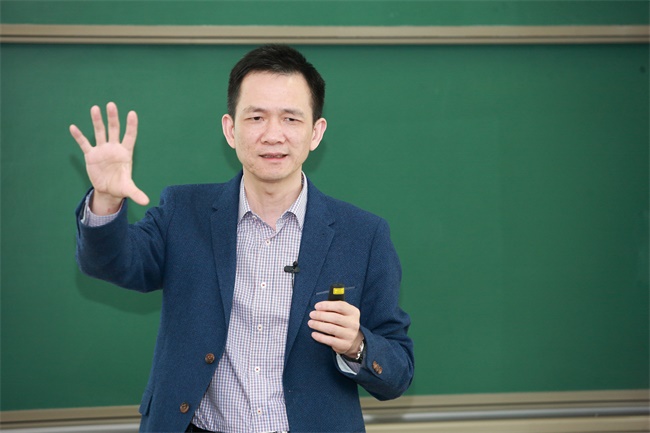


He referred to the two centennial goals set by the 19th Party Congress—by 2020, China to become a well-off society, and by 2049, the nation to become a high income country at par with those OECD countries.


When looking back the development paths of wealthy countries, such as the United States and Japan, China already has met some conditions to escape the middle-income trap and has the potential to later become one of the high-income countries, according to Yao.


“High income countries have some similarities in common,” said Yao, citing a quote from Leo Tolstoy's book Anna Karenina—happy families are all alike; every unhappy family is unhappy in its own way.


Some similar characteristics shared by the high income countries include high saving rate, thorough industrialization process, exporting manufacturing goods, high human development levels, relatively equal distribution of income and wealth, and has a stable political environment.


In the meantime, it is not at all difficult for China to achieve the goals in sole economic terms, because Chinese economy only needs to grow 1.7 percentage points higher than that of the United States during the 2016 to 2049 period, he said.


Nevertheless, some of challenges or “grey rhino”, as Yao put it, will pose challenges amid China’s modernization process, such as the aging population, as the baby boomers will pose a big challenge for China’s social security and healthcare systems.


A better educated labor force, automation and artificial intelligence will do to tackle the challenge, according to Yao.


External international challenges, say, uncertainties brought by the United States, need to be dealt carefully, he said.


He said he thought the ultimate goal of the trade war sparked by the Trump administration is not only related to the trade issue.


The United States’ efforts to protect its key domestic industries and political conflicts upon Taiwan deserve a closer look, as the US has labeled China as a nation pursuing economic aggression designed to weaken America, according to Yao.


“China should continue open its door wider and implement reform,” he said, “that is the best way to tackle Trump’s protectionism.”


In the meantime, China should find ways to cooperate with the US because no one hopes to see a lose-lose situation.


Kelvin Yu, MBA Manager of BiMBA program of National School of Development did an introduction of the program after Yao’s speech.

China on the right track to fulfill its modernization bids

Mar 30-2018   


BEIJING March 30th –China is capable to fulfill its modernization bids with efforts to implement reforms and opening up, according to dean of National School of Development of Peking University.


Speaking at a lecture held at National School of Development, Peking University on March 30th, Yao Yang, dean of National School of Development, Peking University explained where the world’s second largest economy is and where it is heading for.


Yao said with some foundation paved in the past several years, China is able to achieve its goal as scheduled, if continued efforts in opening up and reforms can be in place.


He referred to the two centennial goals set by the 19th Party Congress—by 2020, China to become a well-off society, and by 2049, the nation to become a high income country at par with those OECD countries.


When looking back the development paths of wealthy countries, such as the United States and Japan, China already has met some conditions to escape the middle-income trap and has the potential to later become one of the high-income countries, according to Yao.


“High income countries have some similarities in common,” said Yao, citing a quote from Leo Tolstoy's book Anna Karenina—happy families are all alike; every unhappy family is unhappy in its own way.


Some similar characteristics shared by the high income countries include high saving rate, thorough industrialization process, exporting manufacturing goods, high human development levels, relatively equal distribution of income and wealth, and has a stable political environment.


In the meantime, it is not at all difficult for China to achieve the goals in sole economic terms, because Chinese economy only needs to grow 1.7 percentage points higher than that of the United States during the 2016 to 2049 period, he said.


Nevertheless, some of challenges or “grey rhino”, as Yao put it, will pose challenges amid China’s modernization process, such as the aging population, as the baby boomers will pose a big challenge for China’s social security and healthcare systems.


A better educated labor force, automation and artificial intelligence will do to tackle the challenge, according to Yao.


External international challenges, say, uncertainties brought by the United States, need to be dealt carefully, he said.


He said he thought the ultimate goal of the trade war sparked by the Trump administration is not only related to the trade issue.


The United States’ efforts to protect its key domestic industries and political conflicts upon Taiwan deserve a closer look, as the US has labeled China as a nation pursuing economic aggression designed to weaken America, according to Yao.


“China should continue open its door wider and implement reform,” he said, “that is the best way to tackle Trump’s protectionism.”


In the meantime, China should find ways to cooperate with the US because no one hopes to see a lose-lose situation.


Kelvin Yu, MBA Manager of BiMBA program of National School of Development did an introduction of the program after Yao’s speech.