



HRH Prince Andrew, the Duke of York visits National School of Development and Institute of South-South Cooperation and Development at Peking University
May 29-2018
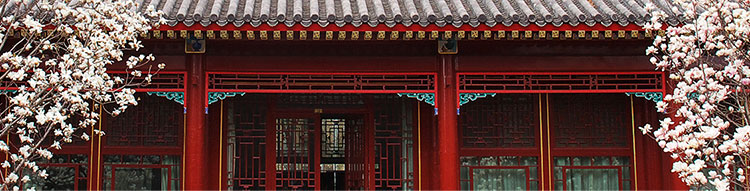
HRH Prince Andrew, the Duke of York, visited the National School of Development (“NSD”) and Institute of South-South Cooperation and Development (“ISSCAD”) at Langrun Garden on May 29, 2018.
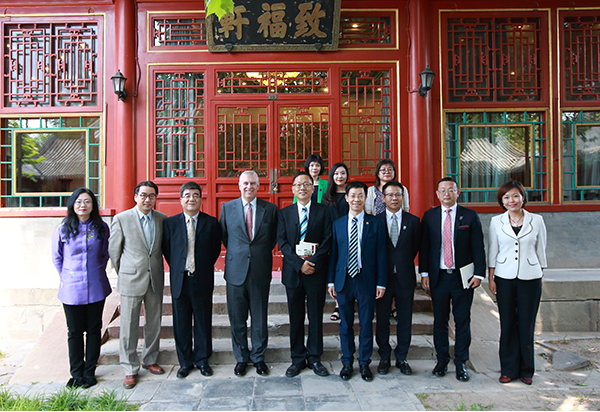
The welcoming party comprised: Professor Hai Wen, Dean of HSBC Business School, Peking University, Vice Chairman of Peking University Council and former Vice President of Peking University; Professor Yu Miaojie, Deputy Dean of NSD; Fu Jun, Academic Dean of ISSCAD; Professor Yang Zhuang, co-Dean of the BiMBA Business School at NSD; Liu Changyan, Assistant Dean of NSD and Director of the MBA program; and Li Yanchao, research fellow at the Institute of New Structural Economics international think tank.
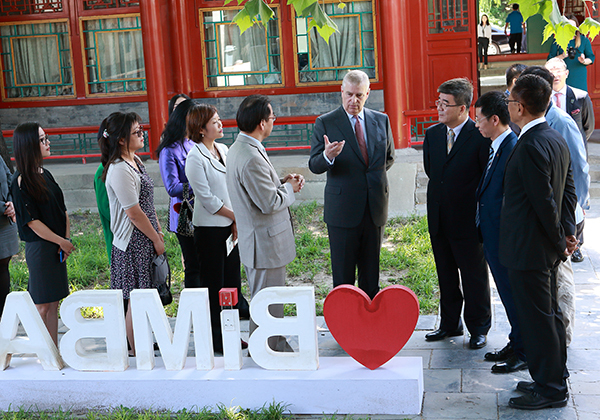
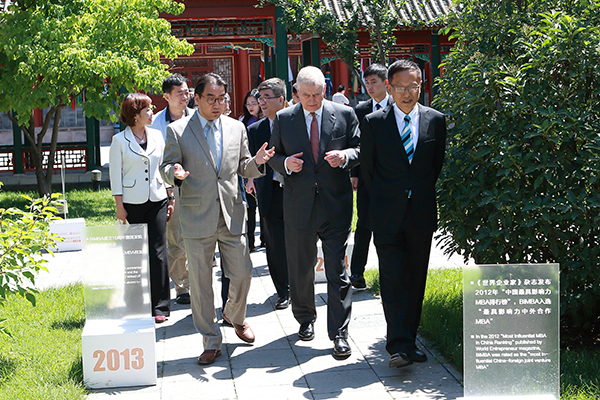
HRH’s visit began with an introduction of Langrun Garden’s history and current development by Professor Hai Wen. Formerly known as Chunhe Garden, Langrun Garden was bestowed to Prince Yonglin (Prince Qing), the 17th son of Emperor Qianlong, during the reign of Emperor Jiaqing in the Qing Dynasty; hence, it was also commonly referred to as Prince Qing Garden. At the end of the reign of Emperor Daoguang, the garden was in turn bestowed to Prince Yixin (Prince Gong), and renamed Langrun Garden. Upon the death of Prince Yixin in the 24th year of the reign of Emperor Guangxu, Langrun Garden was placed under the administration of the Ministry of Internal Affairs. At the time, the Empress Dowager Cixi, who took up residence at the Summer Palace, would conduct court affairs there. Hence Langrun Garden became a venue where Cabinet and State Council ministers would meet to deliberate national affairs. Today, NSD is one of China’s high-level national think tanks, and brilliant economists and scholars of management studies gather at Langrun Garden to explore and discuss ways to govern and contribute to the welfare of the people, as well as to manage corporations.
Prince Andrew then met with the welcoming party at the Zhifuxuan conference room.
Professor Hai Wen mentioned to Prince Andrew that China was still a planned economy 40 years ago, but government functions, which had since changed, were primarily concerned with strategic planning, such as proposing the “Belt and Road” initiative, “Made in China 2025” and other strategies, while economic operations were, by and large, directed by the market. NSD was a national think tank, and provided policy consultation and recommendations to the government. Traditional economic theory advocated a laissez-faire economy, but some of the economists at NSD believed that a “facilitating State”, and investment in education and infrastructure by the government had also contributed significantly to China’s economic stability and prosperity. Prince Andrew said that the role of the Chinese government was in the process of changing, and China was becoming a driver of the market economy.
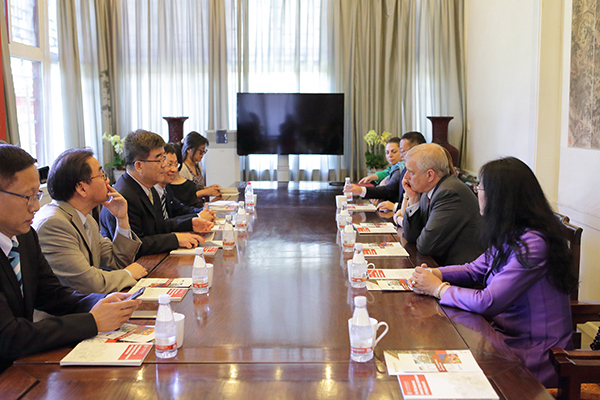
Deputy Dean Yu Miaojie of NSD also briefed Prince Andrew about China’s economic growth experience, pointing out that China was a relatively developed nation with labor intensive industries, and a fairly large market. Years of development had transformed China into a more internationalized country than India. The special economic zones it set up as part of its reform measures had successfully attracted massive amounts of foreign investment. Prince Andrew said that China’s prosperity had meant that many foreign investors were considering how to best participate in China’s economic growth.
In particular, he inquired about the status of innovative and entrepreneurial development, and hoped that China’s entrepreneurs would provide more resources and development platforms. Fu Jun, Academic Dean of ISSCAD, said that innovative and entrepreneurial activities were flourishing in China at this time. ISSCAD students, who hailed from 39 developing countries around the world not only studied the reform experience in China’s classrooms, they had also personally witnessed China’s innovative vitality by visiting companies such as Huawei, Tencent and Beijing Genomics Institute.
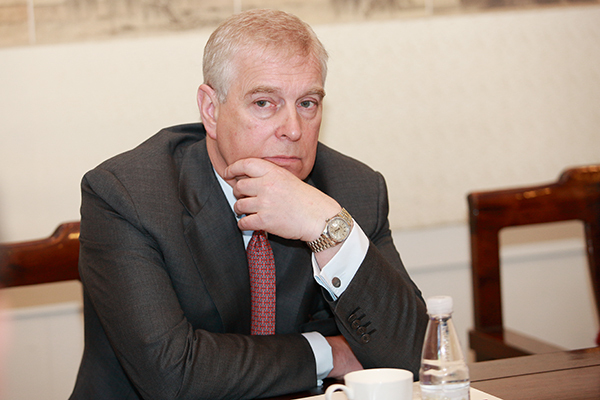
Prince Andrew said that he hoped to be able to create true value for China, and find entrepreneurs with potential. Yang Zhuang, co-Dean of the BiMBA Business School at NSD, said that world class business and entrepreneurial talent could be found in China’s top business schools. UK investors would benefit from building close partnerships with schools of higher learning in China, and see their entrepreneurial activities grow rapidly. In recent years, Professor Yang Zhuang has led a delegation of BiMBA students on study tours to the UK, and experienced sailing leadership, broadening the students’ horizon and level of leadership in a British cultural setting. In 2016, Peking University and University College London (“UCL) entered into a strategic partnership agreement to offer a joint academic program; the inaugural MBA class commenced in 2017. A group of excellent students are now learning about Peking University’s “freedom of thought and all-embracing” spirit, and are also taking many innovative courses provided by UCL. These students are at the forefront of innovation.
At the end of the meeting, Prince Andrew said that he had a fruitful exchange with the professors at NSD and ISSCAD, and hoped to have the opportunity to conduct additional and more in-depth exchanges in the future.
(Reported by Zhang Tong, NSD)