




The ceremony was hosted by Yu Bin, Assistant Dean of BiMBA Business School, Director of the MBA Center, and Director of Career Development.
Deans' Addresses
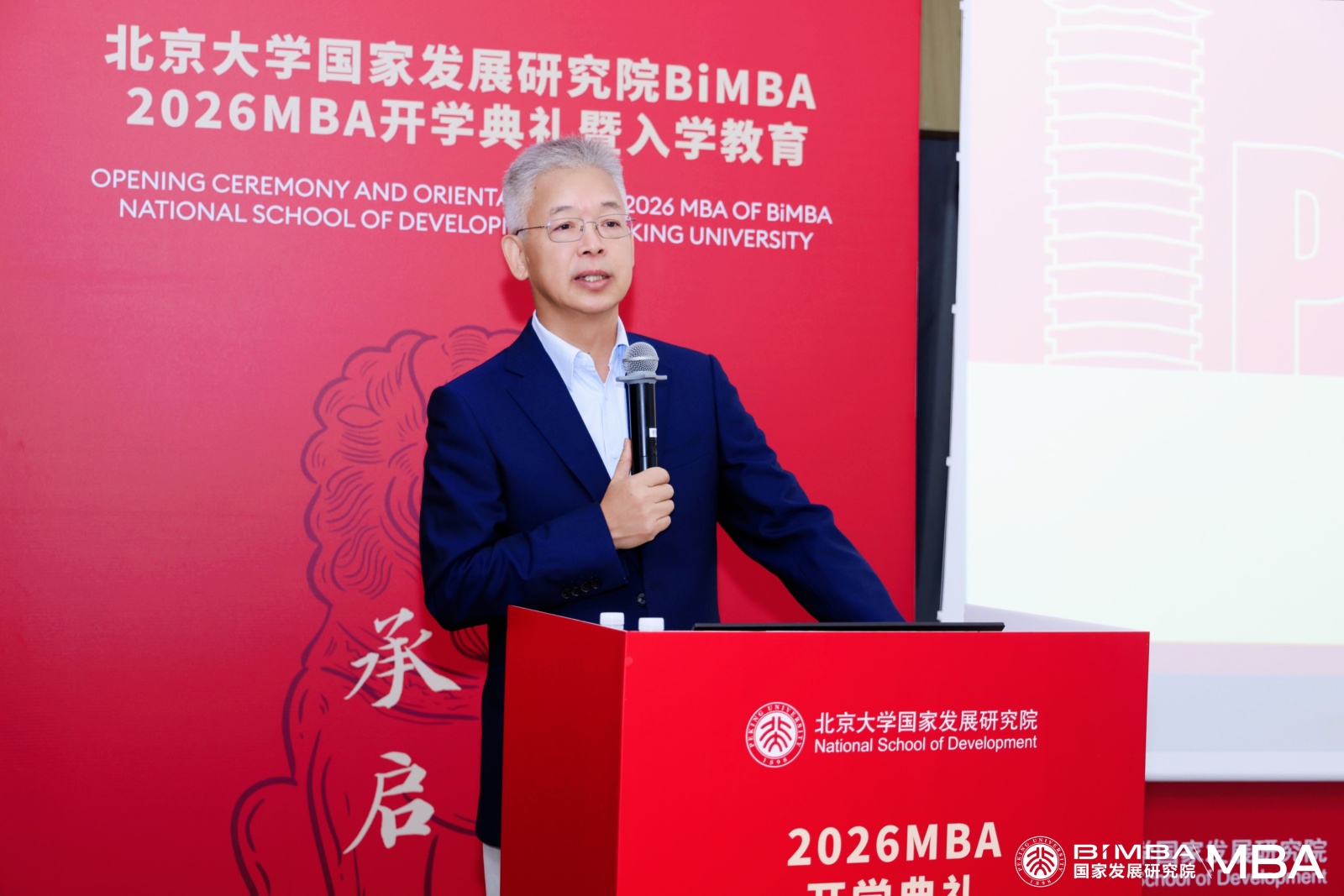
Huang Yiping, Boya Distinguished Professor of Peking University, Dean of the National School of Development, and Dean of the Institute of South-South Cooperation and Development, delivered the opening address on behalf of the school. He traced NSD's history back 32 years to its founding by six overseas-returned scholars, and cited the observation that NSD was both a product of and a major contributor to China's reform and opening-up. He highlighted NSD's diverse degree programs, its role as a leading national think tank deeply engaged in nearly every major policy debate during the reform era, and the extensive global alumni network of the Institute of South-South Cooperation and Development, whose students come from over 80 countries. He encouraged incoming students to make the most of the school's rich resources.
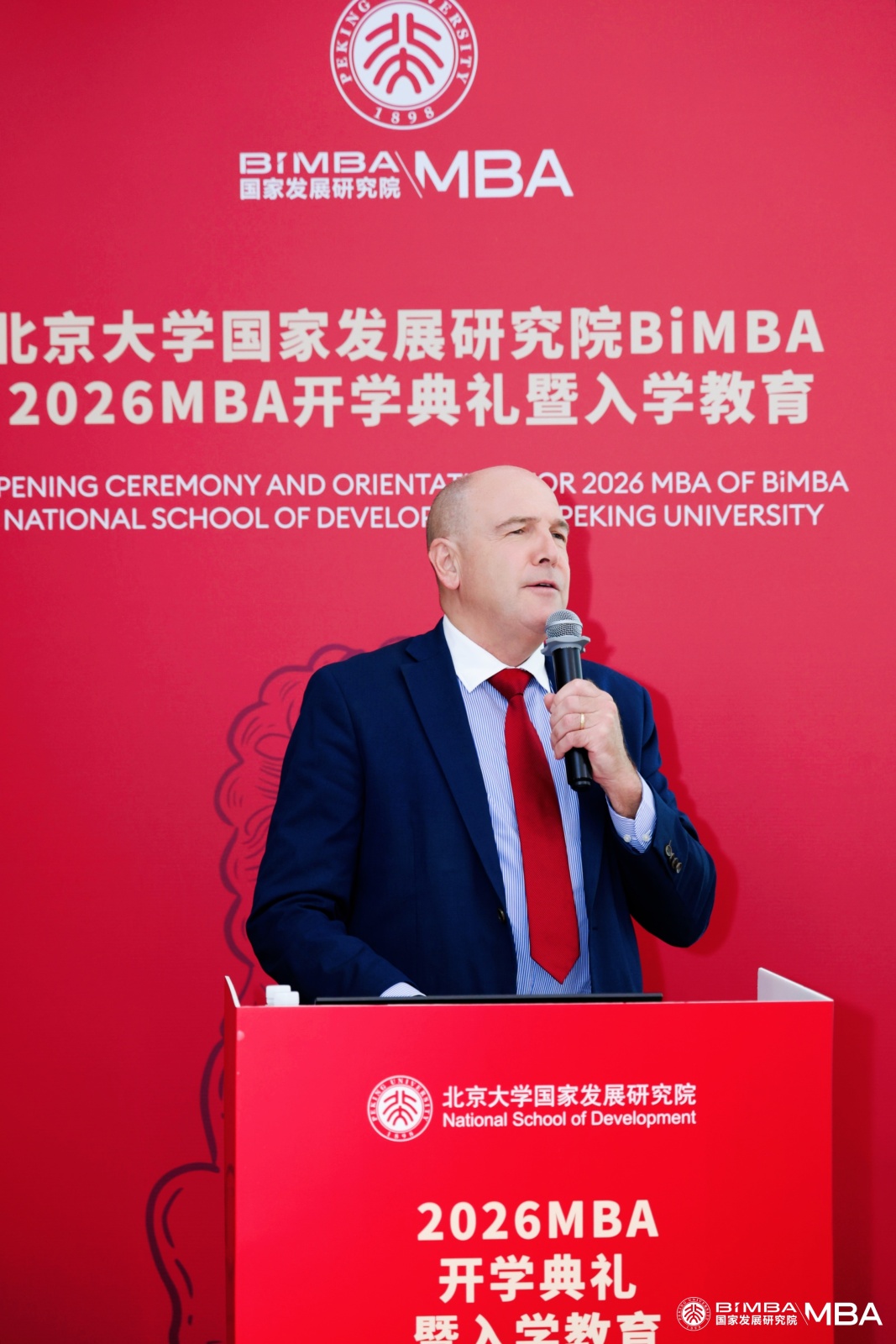
Following him, Huang Zhuo, Professor and Vice Dean of NSD, Dean of BiMBA Business School offered his congratulations and outlined three priorities for MBA study. First, learn to work in teams—in the AI era, trust and cooperation among people matter more than ever. Second, develop the ability to think and decide from multiple perspectives, a distinctive advantage of this business school embedded within a think tank. Third, cultivate self-directed learning in the age of AI, because while models taught in the classroom will eventually become outdated, the capacity to learn will serve them throughout their careers.

Messages from Partner Schools
Dirk Buyens, Professor at Vlerick Business School and International Dean of BiMBA, congratulated the new cohort. He pointed out that one goal of an MBA program is not to focus on the professors, but on one another—the quality of classmates and how they challenge each other matter more to the learning experience than the quality of the faculty. He reflected on the 19-year strategic partnership between Vlerick and NSD, introduced Vlerick's distinctive approach to graduate-only education since its founding in 1953, and shared its mission to "transform people for a better world."
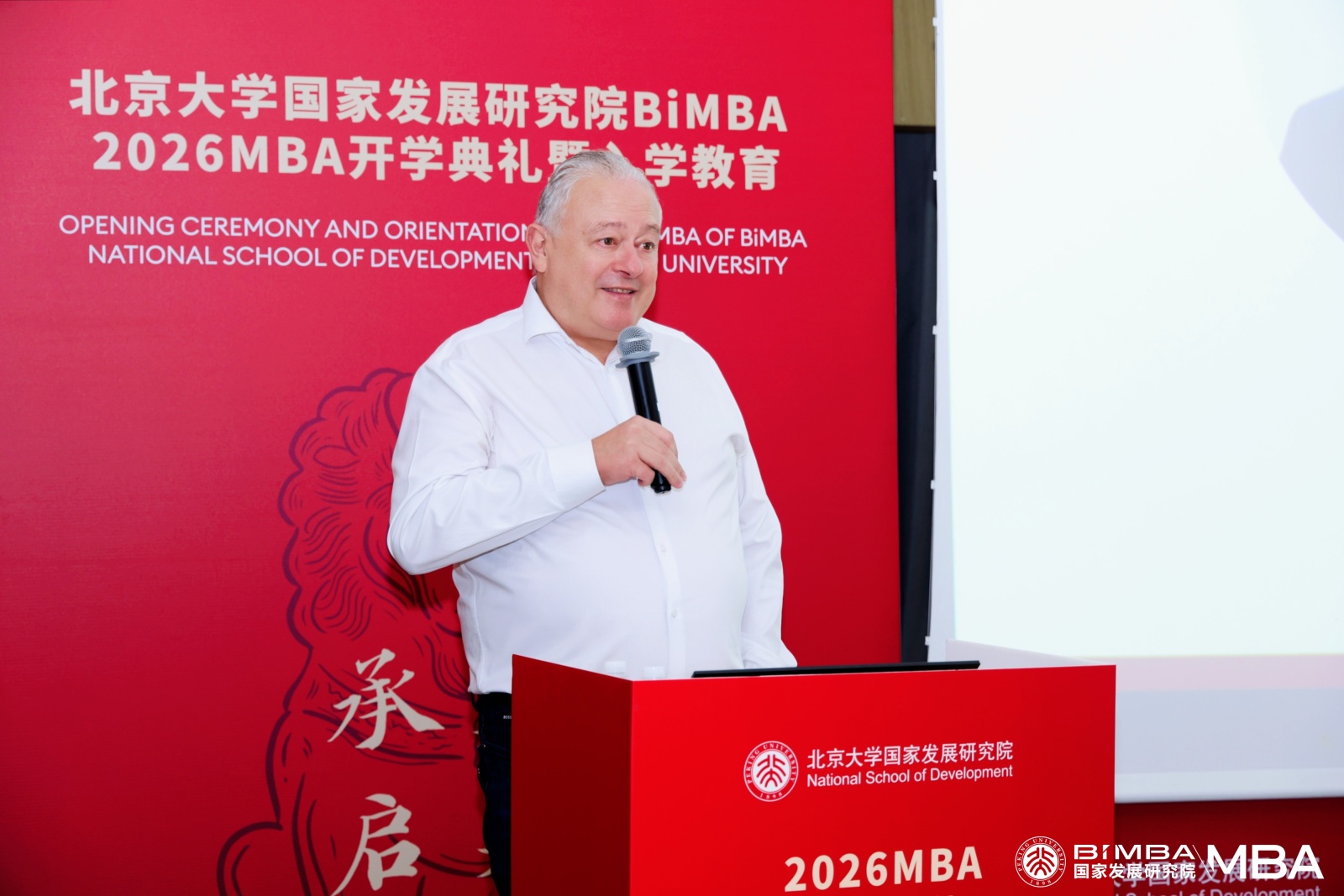
Filip Roodhooft, Professor and Partner at Vlerick Business School, welcomed the students on behalf of the Vlerick community. Drawing on the words of a senior Vlerick professor, he described the business school mission as touching "the heads, hands, and hearts" of students: touching the head means teaching theories and ways of thinking; touching the hands means creating real impact; touching the heart means making students feel cared for, building lifelong emotional bonds. He noted that many business schools reach only the head and hands, while Vlerick aspires to touch the heart as well.
"Many business schools reach only the head and hands, while Vlerick aspires to touch the heart as well."
— Filip Roodhooft, Vlerick Business School
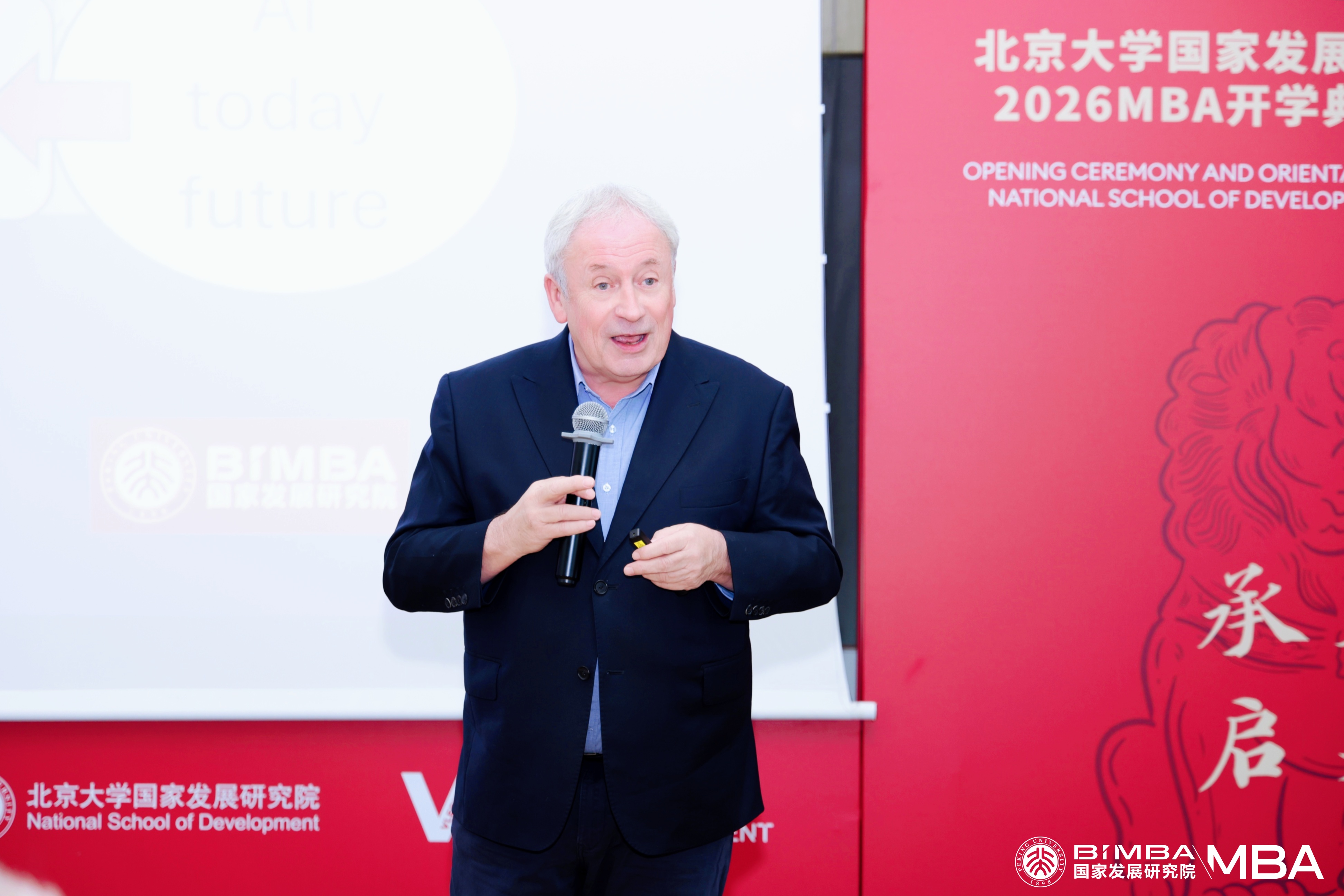
Davide Ravasi, Professor and Dean of UCL School of Management, reflected on the school's founding in 2007 and its partnership with NSD beginning in 2017. Drawing on conversations with employers, he offered two pieces of advice for the AI era. First, don't depend too much on AI—don't ask AI for answers; learn to use AI to ask better questions. Employers, he noted, have no shortage of people who can use AI; what they lack are people who can work critically with AI and collaborate well with others. Second, don't assume you already know what will matter in the future—what matters is often not the content itself, but the process of learning, and the training that comes from independently completing human tasks will ultimately make a difference in the workplace.

Alan Parkinson, Professor of Education, Director of Teaching, Vice Dean (Education), and Co-Lead of the Finance, Accounting and Economics Teaching Group at UCL School of Management, invited students to reflect on their own transformation journey. He explained that the MBA journey involves both natural evolution and intentional shaping, and combining the two accelerates growth. He emphasized being proactive rather than reactive—the best survivors are those who learn from their mistakes. He proposed two destinations for this journey: becoming a better manager, and graduating to make a better contribution to the world.
Student Representatives
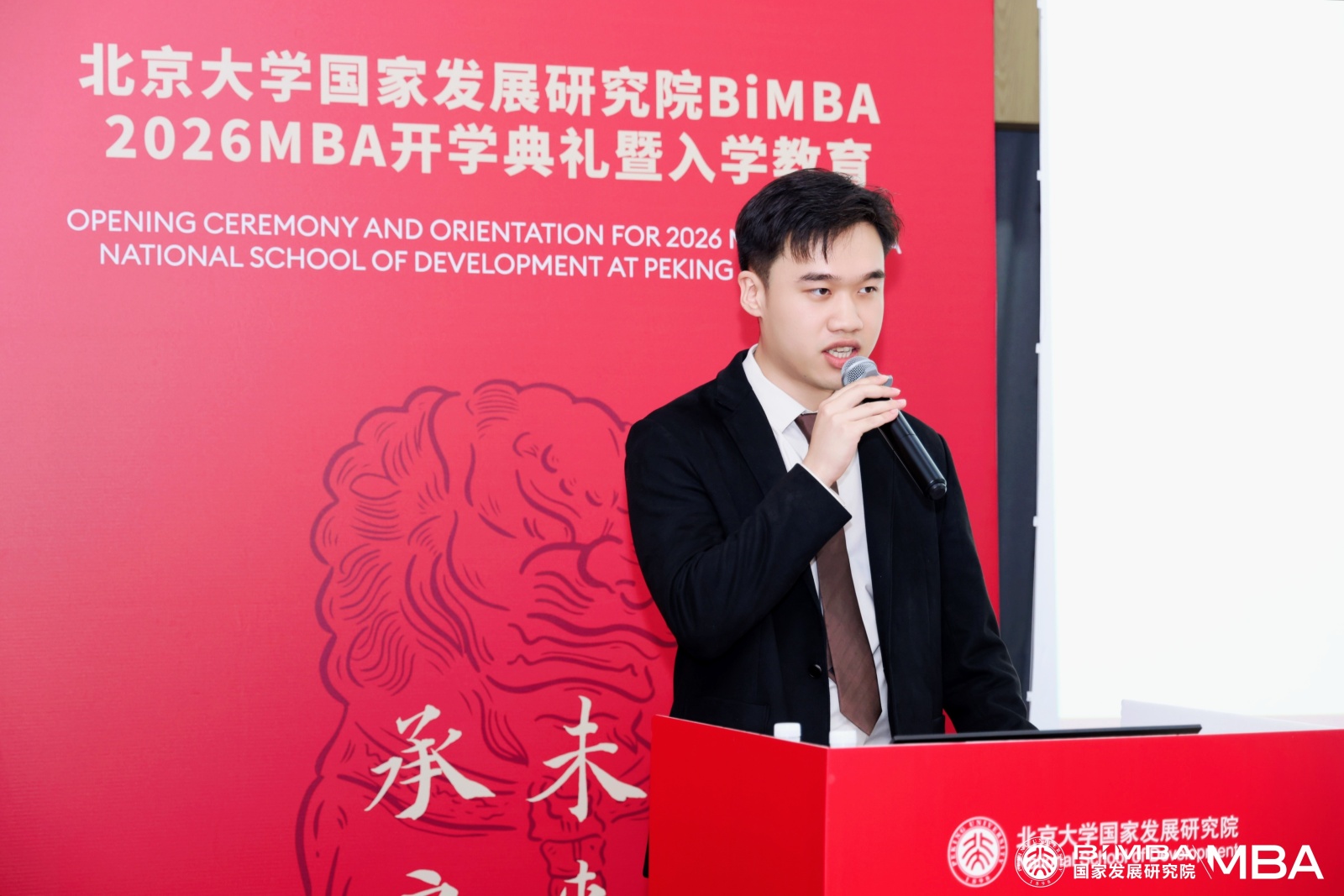
Hu Xiaokun, a student from the 2026 PKU-Vlerick MBA program, shared his journey and reasons for choosing BiMBA. With a background in engineering and international business in the medical device industry, his transition from technology to business taught him that good business decisions require not only technical knowledge but also a broad understanding of people, markets, and different perspectives—one of the main reasons he chose BiMBA. He believes that at this business school within a think tank, he can better understand the Chinese economy and learn from classmates with diverse backgrounds. He offered his fellow students a message: the most valuable thing in the classroom is not always the answer, but sometimes a new way of looking at a problem—and each person is the best investment they have ever made.
"The most valuable thing in the classroom is not always the answer, but sometimes a new way of looking at a problem—and each person is the best investment they have ever made."
— Hu Xiaokun, 2026 PKU-Vlerick MBA
Chen Meng, a student from the 2026 PKU-UCL MBA program, described BiMBA as a meeting point between two outstanding institutions: PKU NSD, which has deeply shaped China's understanding of its own economic transformation over decades, and UCL, which brings a global perspective across borders. Students, she said, are not merely enrolling in a program; they are joining a dialogue between East and West. She believes the future belongs to those who can understand China with a global lens and connect the world with Chinese wisdom. She invited her classmates to be curious and courageous, and make this study journey truly matter.

Badge Conferring Ceremony and Group Photo
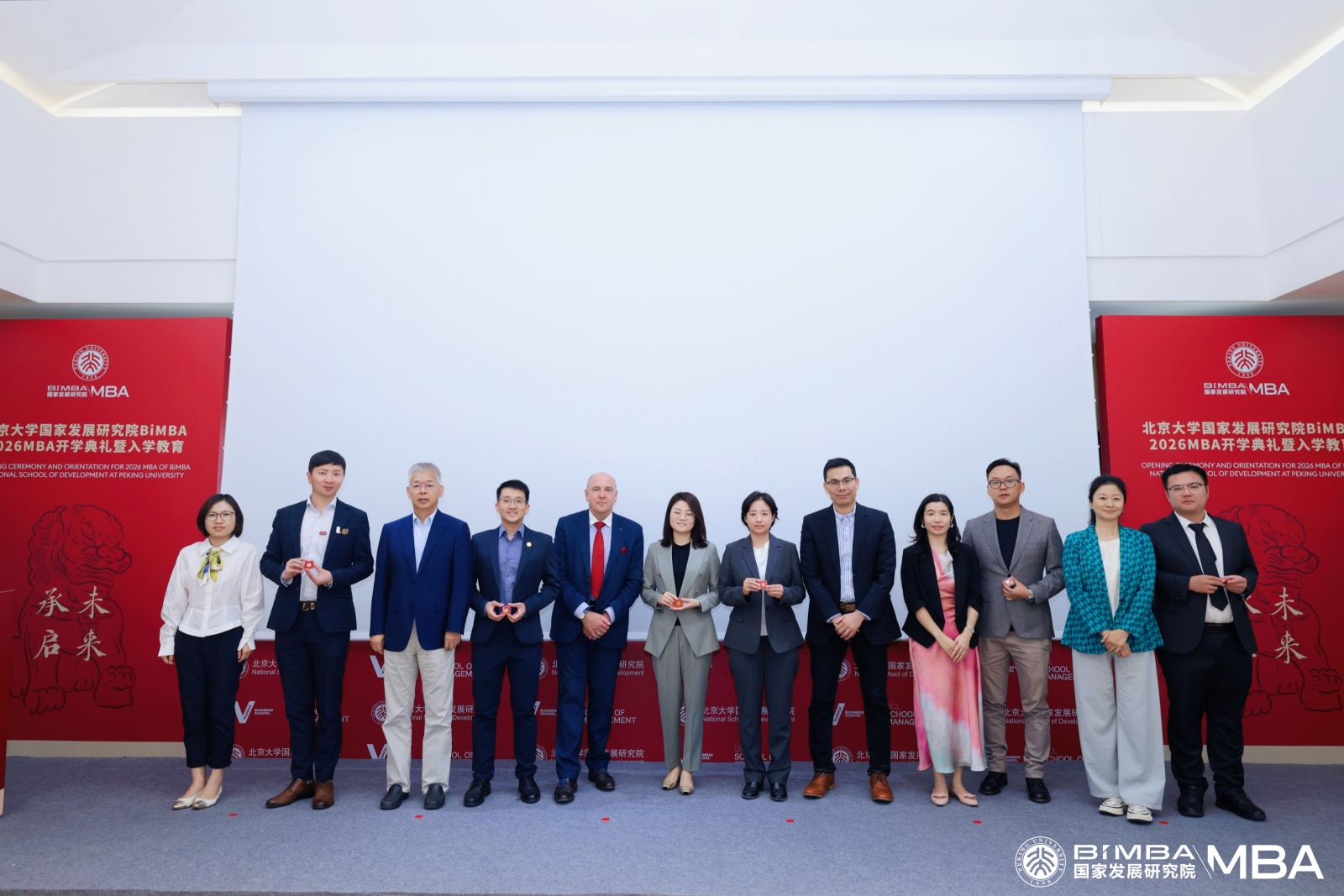
Following the speeches, a Peking University badge ceremony was held. Faculty members and alumni interviewers presented each incoming student with the PKU badge—a symbol of the university's enduring spirit and the start of a new academic journey.
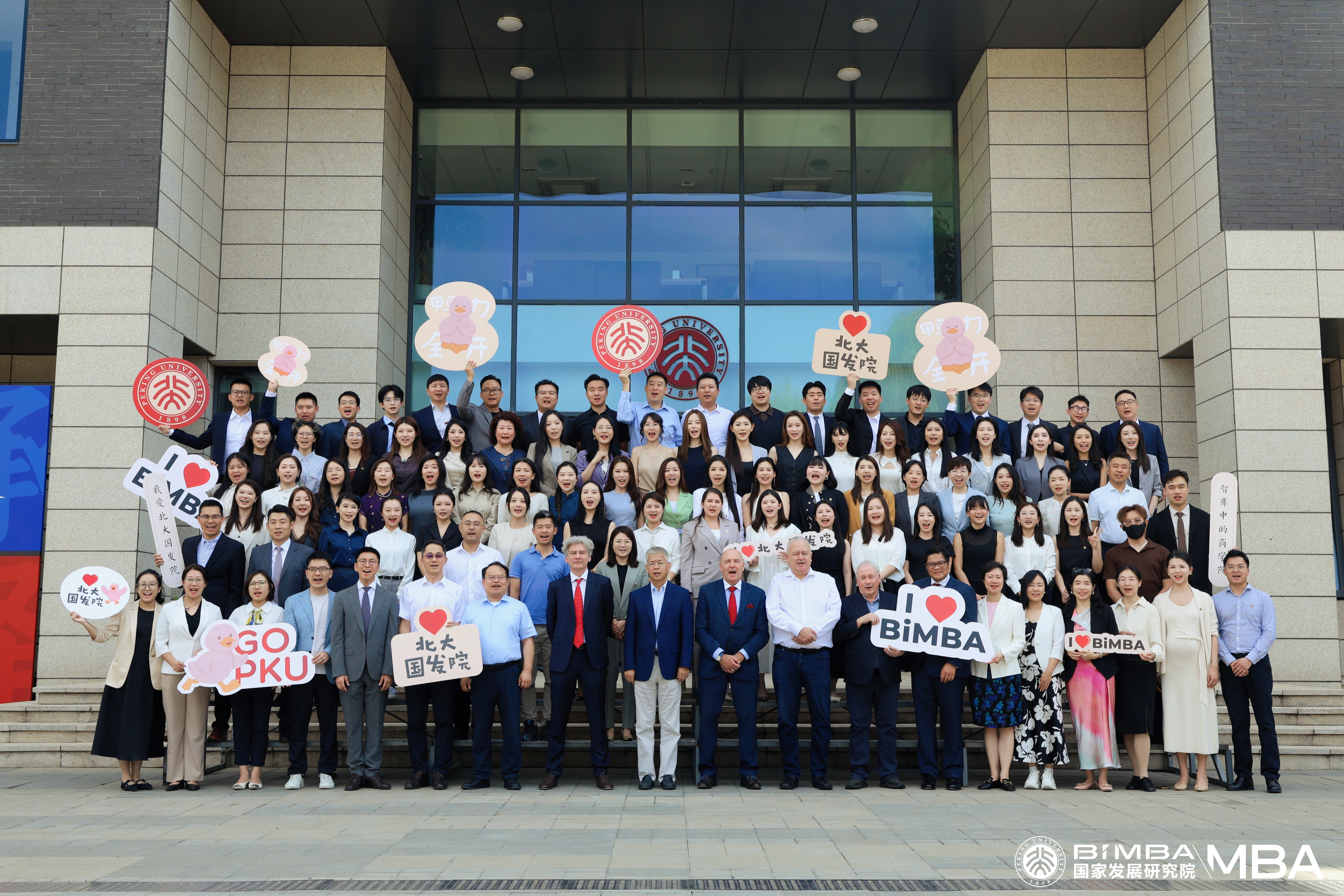
Afterward, faculty and students gathered at Chengze Garden for a group photo.
Orientation
The opening ceremony was followed by an orientation session designed to help students quickly familiarize themselves with BiMBA's academic system and support resources.
Ma Hongli, Deputy Director of the MBA Center at BiMBA Business School, outlined the overall framework of the MBA journey. She proposed that the journey is rooted in MBA learning, supported by three pillars: broadening horizons outward, building meaningful relationships with others, and discovering oneself inward. She encouraged students to learn deeply, connect actively, and grow continuously.
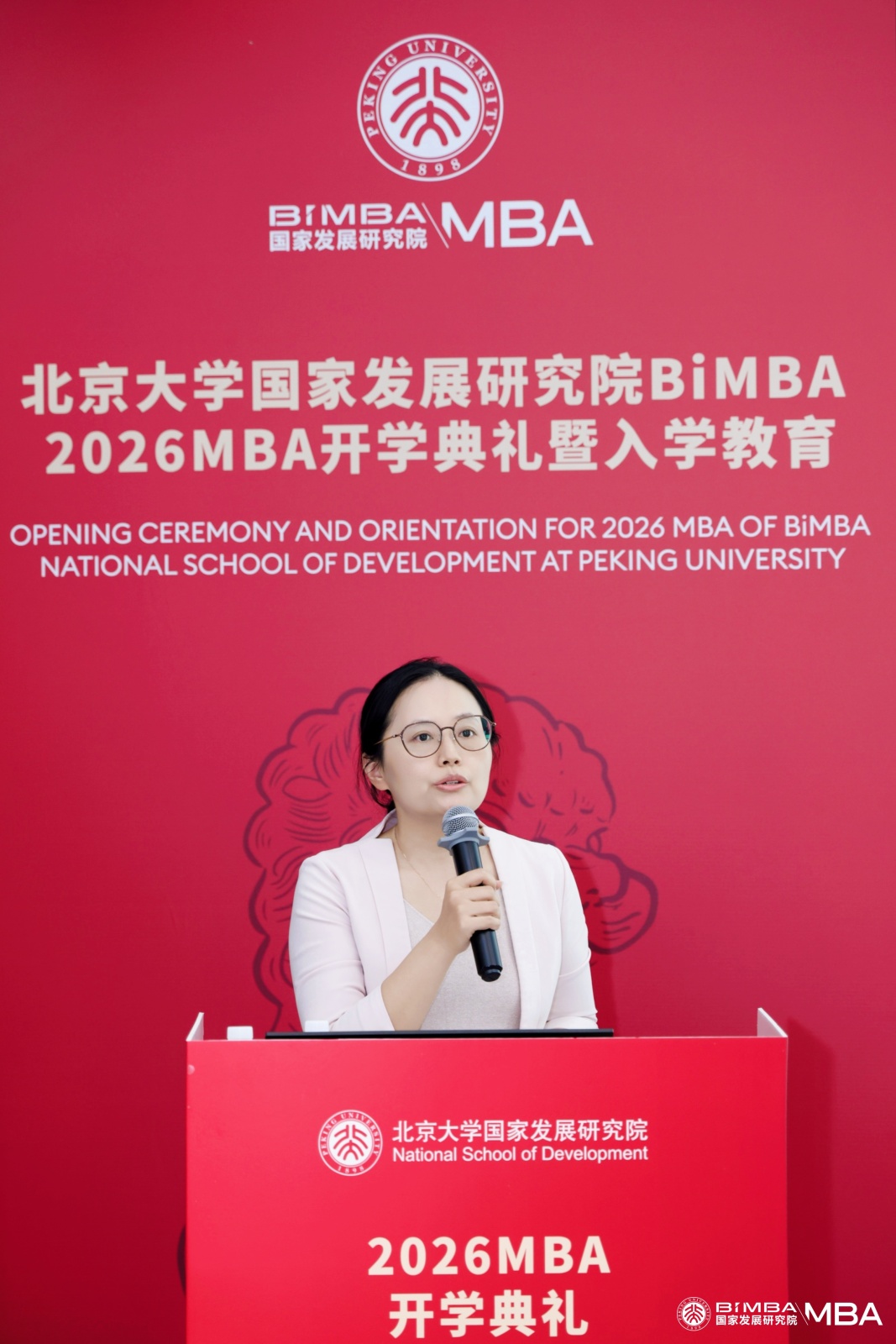
Fang Ying, Director of Academic Affairs at BiMBA Business School, introduced BiMBA's teaching management system and academic regulations. She covered key areas including academic integrity, attendance requirements, classroom discipline, assignment submission, and graduation requirements, helping students understand the rules they need to follow during their studies.
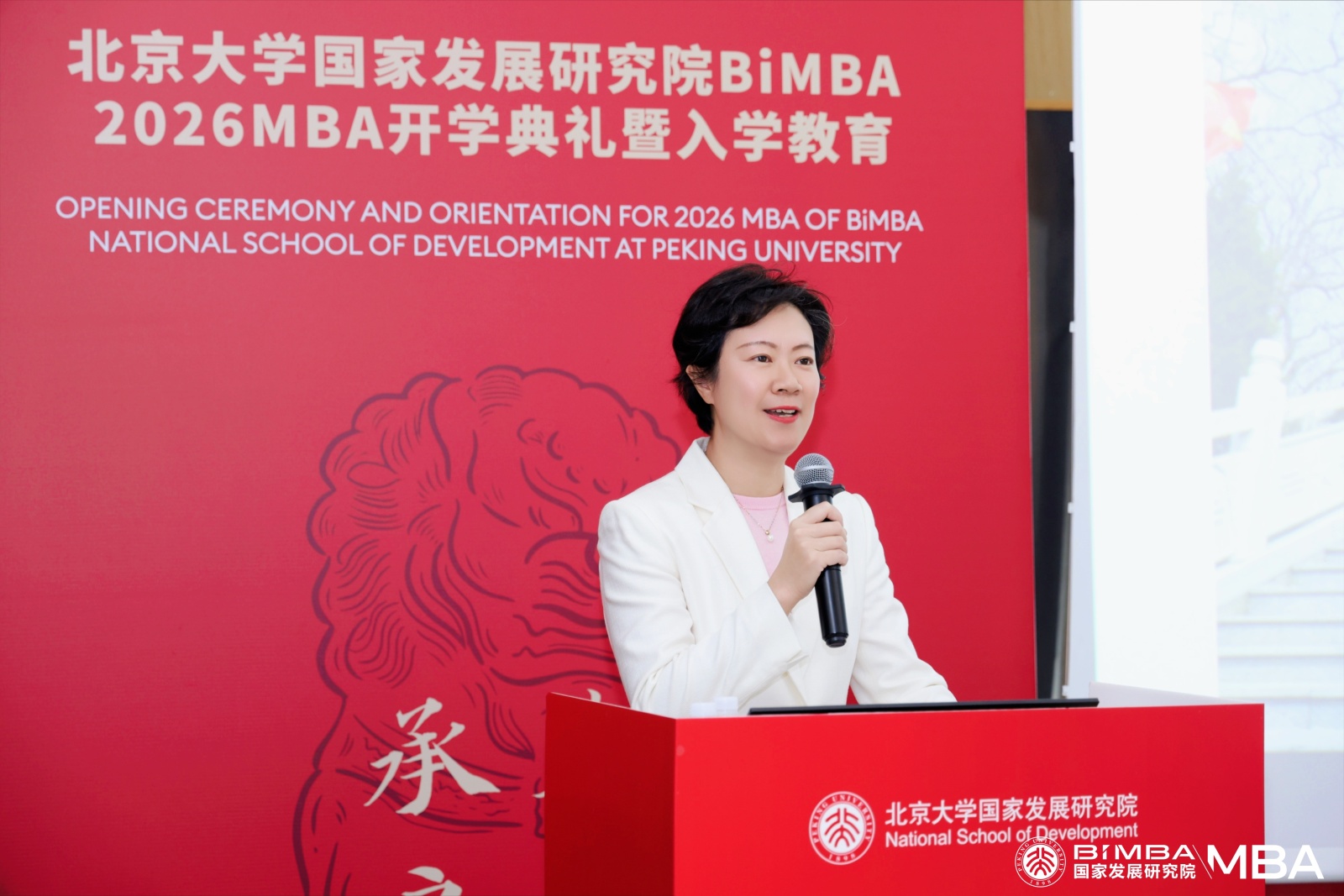
Jin Wei, Deputy Director of Career Development, introduced the career development service system. The school has mapped a staged growth path from self-discovery to goal achievement. She highlighted BiMBA's unique one-on-one career mentor program and shared several core competencies most in demand in the future workplace, encouraging students to plan early and actively use available resources.

The session concluded with a detailed briefing on academic management regulations.
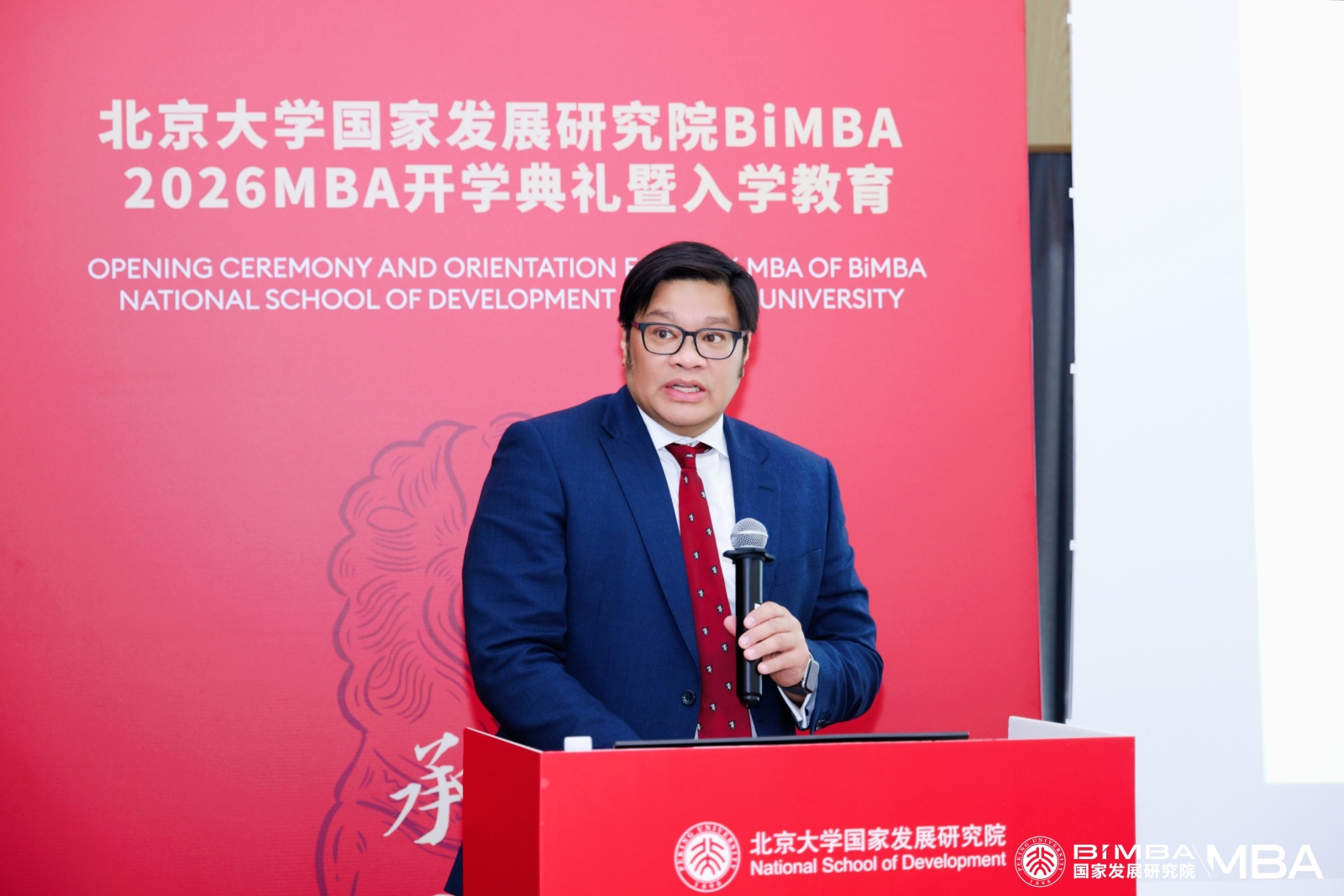
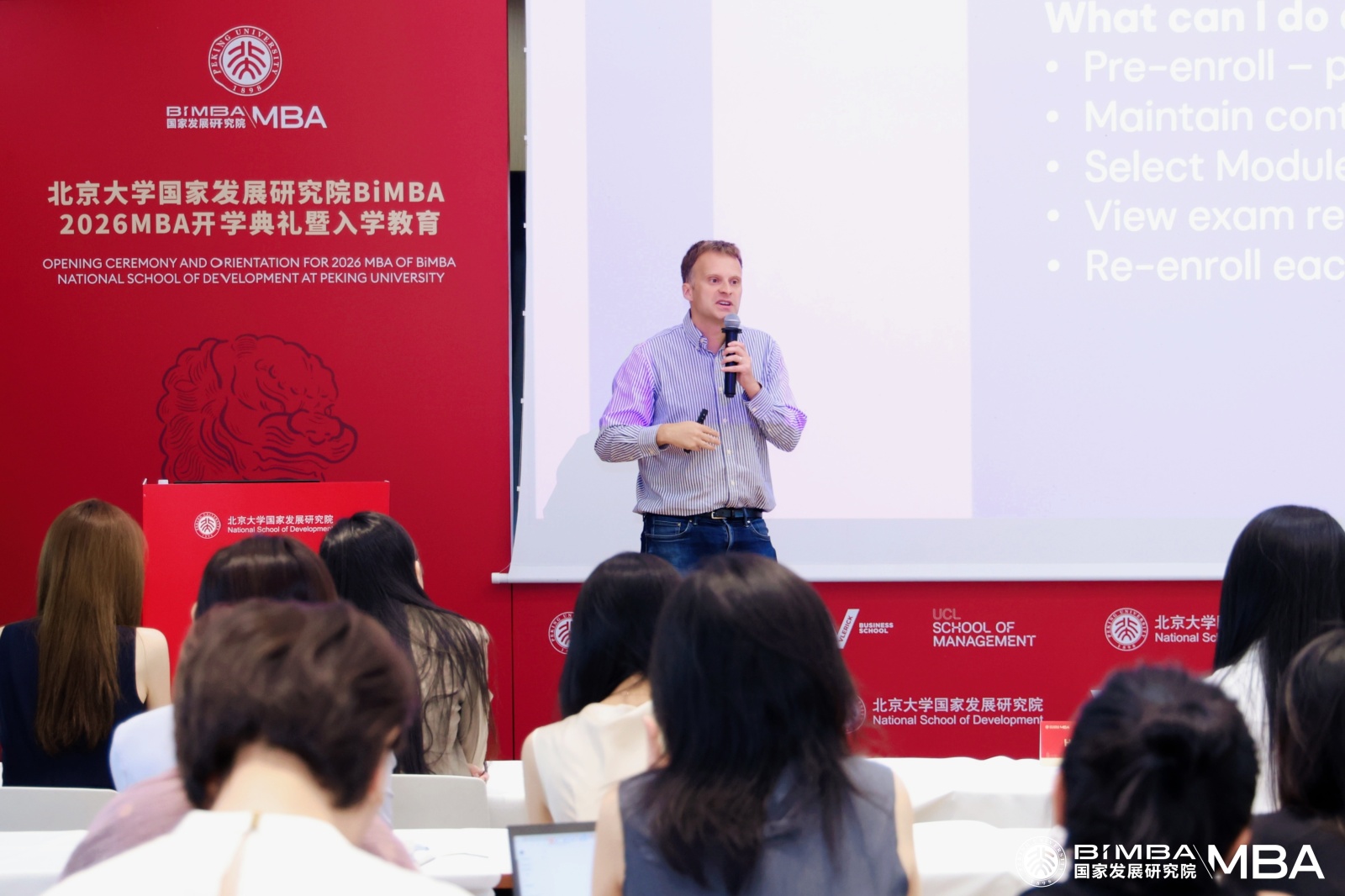


The PKU NSD BiMBA 2026 Opening Ceremony and Orientation concluded successfully. May the 2026 Class explore the unknown and embrace challenges during their time at Chengze Garden, and grow into future leaders with global vision and local wisdom on this platform where Eastern and Western insights converge.
Once BiMBA, Always BiMBA!