




Where Two World-Leading Universities Meet: How PKU and UCL Are Redefining MBA Education
Jun 18-2026
In June 2026, the latest edition of the QS World University Rankings reaffirmed what many in global higher education already knew: Peking University (PKU) and University College London (UCL) stand firmly among the world's finest. PKU rised to 13th globally, while UCL, its strategic partner in MBA education, held steady at 8th worldwide. Together, these two centennial institutions form an unparalleled joint platform for management education — the PKU-UCL MBA programme.
The arithmetic of this partnership is compelling. Individually, each university commands extraordinary academic prestige. Collectively, they offer something no single institution could replicate: a genuine bridge between the intellectual traditions of the East and West, built on twin pillars of world-class scholarship.
A Partnership of Equals, A Convergence of Excellence
PKU's standing as China's premier university is hardly new. But its sustained ascent in global rankings — now 13th worldwide, with top-tier placements in linguistics, modern languages, social policy and administration, classics and ancient history — reflects an institution in constant intellectual motion. UCL's credentials are equally formidable. Ranked 8th globally, it boasts the world's number one positions in education and architecture, top-five placements in archaeology, anthropology and geography, and over a dozen disciplines within the global top ten. When UCL President & Provost Dr Michael Spence remarked that "to be ranked among the global top 10 is a tremendous achievement and a wonderful reflection of the outstanding work our community has been doing for two centuries," he captured the ethos that animates this partnership — a restless pursuit of excellence that refuses to settle.
A Bridge Between Two Worlds of Thought
Launched in 2016, the PKU-UCL MBA programme was born from a landmark agreement between the two universities. It is jointly delivered by Peking University's National School of Development (NSD) — China's preeminent think tank for economics and public policy — and the UCL School of Management, a global leader in technology, innovation, analytics and entrepreneurship.
The intellectual architecture is deliberate and distinctive. NSD brings decades of rigorous scholarship on China's economic transformation, deep policy insight, and an unparalleled ability to decode the logic behind the world's second-largest economy. The UCL School of Management contributes frontier thinking on technological disruption, entrepreneurial strategy and evidence-based decision-making. The result is a curriculum that refuses the false choice between "China depth" and "global breadth" — it insists on both.
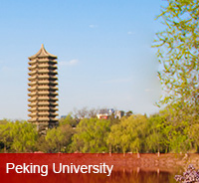
Students inhabit two worlds. On PKU's historic Langrun Garden and Chengze Garden campuses — former imperial gardens turned centres of intellectual inquiry — they engage with NSD faculty who illuminate the structural forces reshaping China's economy. They learn to read macro trends and translate them into micro-level strategic action. At UCL, they plug into London's global innovation ecosystem, absorbing cutting-edge perspectives on digital transformation, entrepreneurial finance and technology management. The collision and fusion of Eastern and Western mindsets cultivates a distinctive capability: the ability to navigate China with sophistication while operating confidently on the global stage.
Cultivating Leaders for the Knowledge Economy
The programme's ultimate mission is to develop next-generation leaders equipped with global vision, innovative thinking, and the capacity to drive transformative change. As China pursues high-quality development and transitions toward a knowledge-intensive economy, demand for exactly this profile of talent — bilingual in both language and intellectual tradition, fluent in both market logic and policy context — has never been more acute.
The institutional foundation supporting this mission runs deep. NSD's BiMBA Business School, established in 1998 as Beijing's first Sino-foreign joint MBA programme approved by the State Council, has spent over a quarter-century building bridges between Chinese management practice and global business education. With deep partnerships spanning UCL, Vlerick Business School and other world-leading institutions, BiMBA has cultivated tens of thousands of entrepreneurs and senior executives known for their professional rigour, strategic vision, and intellectual breadth. It has earned a reputation as "a business school within a think tank" — a place where management education is grounded not merely in case studies, but in the frontline policy research and economic analysis that shape China's trajectory.
The 2027 QS World University Rankings assess over 1,600 institutions globally across metrics including academic reputation, employer reputation, international research networks, employment outcomes and sustainability. The rankings tell a quantitative story. But the PKU-UCL MBA tells a deeper one — about what becomes possible when two world-leading universities commit not just to parallel excellence, but to genuine intellectual collaboration. It is an education that stands on the shoulders of two giants, seeing further into the future.